Bridges
What to expect
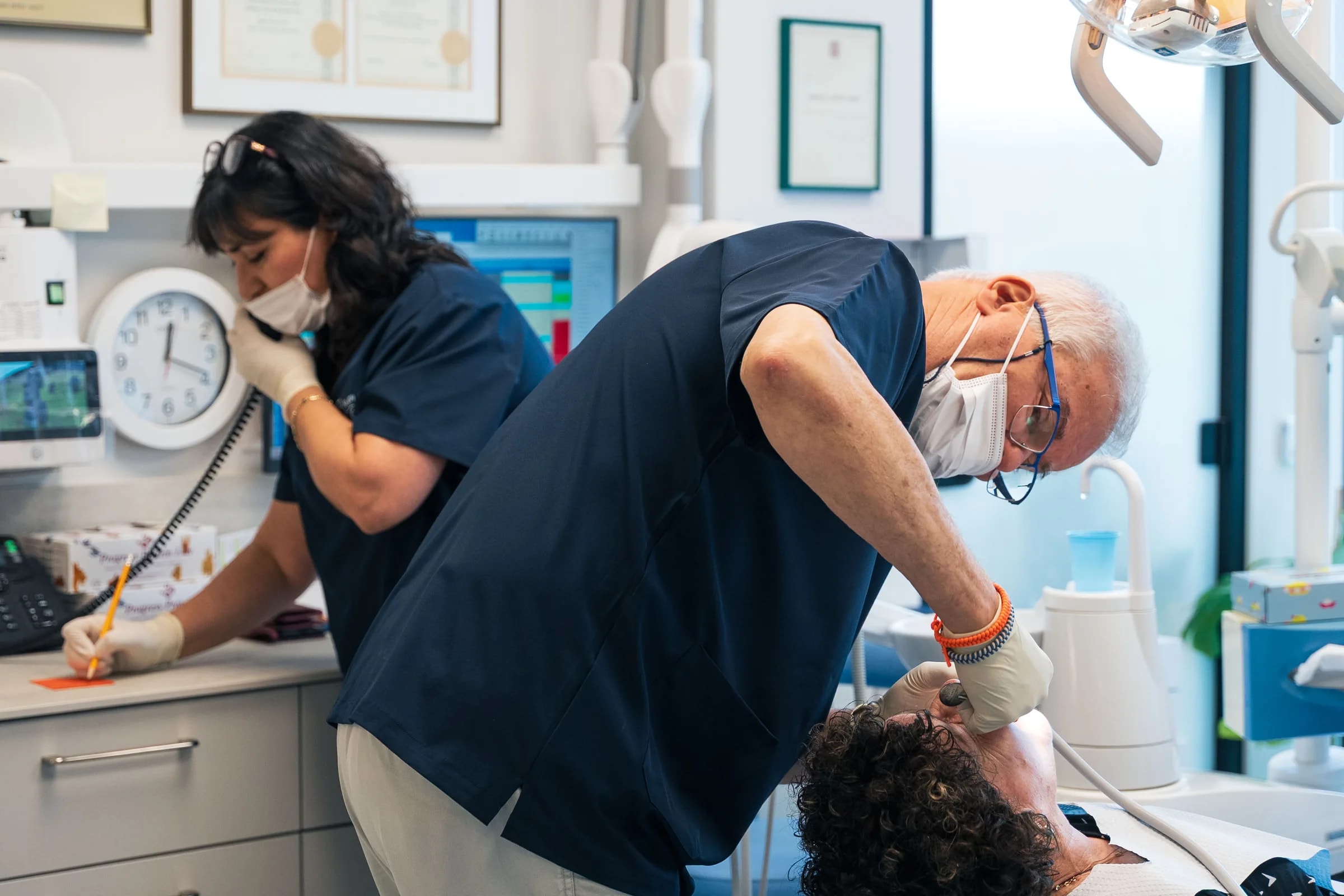
A dental bridge is a permanent restoration designed to replace one or more missing teeth. The bridge consists of artificial teeth supported by adjacent teeth or implants, restoring the continuity of the teeth, chewing function, and aesthetic appearance. The treatment is precisely planned, tailored to the patient's mouth structure and dental condition.
Who is the treatment suitable for?
The treatment suits patients with one or more missing teeth, where it's possible to rely on adjacent teeth or implants for support. It sometimes serves as a suitable alternative to implants, depending on bone condition and other medical considerations. Suitability is determined after professional diagnosis, examining all restoration options.
What the treatment process looks like
Treatment begins with an examination and diagnosis of the condition of the teeth, gums, and mouth structure. Based on the findings, a treatment plan is built, including the type of bridge and how it will be supported. Next, the supporting teeth are prepared if needed, and a precise measurement is taken for fabricating the bridge. Sometimes a temporary bridge is fitted while the permanent bridge is prepared in the lab. At a further appointment, the permanent bridge is fitted and bonded into place, with checks for fit, bite, and comfort.
Ready for a Better Experience?
Reach out to us to schedule a check-up and build a personalized treatment plan. We'd love to guide you with professional, precise, and human care.